











DURABELLA INSTALLATION PROCESS
Installation Process
Installing an in situ bio floor requires a meticulous multi-layer application process to ensure proper adhesion and a flawless finish.
Bio binders (made from plant-based oils ) are highly engineered materials that must be installed under strict climate-controlled conditions.
Environmental & Site Conditions
- Temperature & Humidity: Ensure ambient temperature is between 10°C and 30°C. Relative humidity must be low, and the substrate moisture content should be verified as completely dry to prevent bubbling or curing failures.
- Safety: Our bio binder is an eco-friendly evolution of traditional terrazzo avoiding Red List materials. Our Manufacturer’s installation instructions should be followed and IOG approved installer should be employed, once again our sales office can guide you through this process.
- The installation process takes around 5 to 10 days/area, once substrate is ready.
- For the substrate to be ready, it needs to be:
“Dry” – (rRH) Relative humidity less than 80% RH, tested via an approved IOG installer.
“Level” – SR1 (3mm deviation over 2M). - Movement joints dependent on substrate but subject to using the correct system, can be as large as the building floor plate (the building movement joints, always have to be respected).
- Durabella must always be applied to a level surface
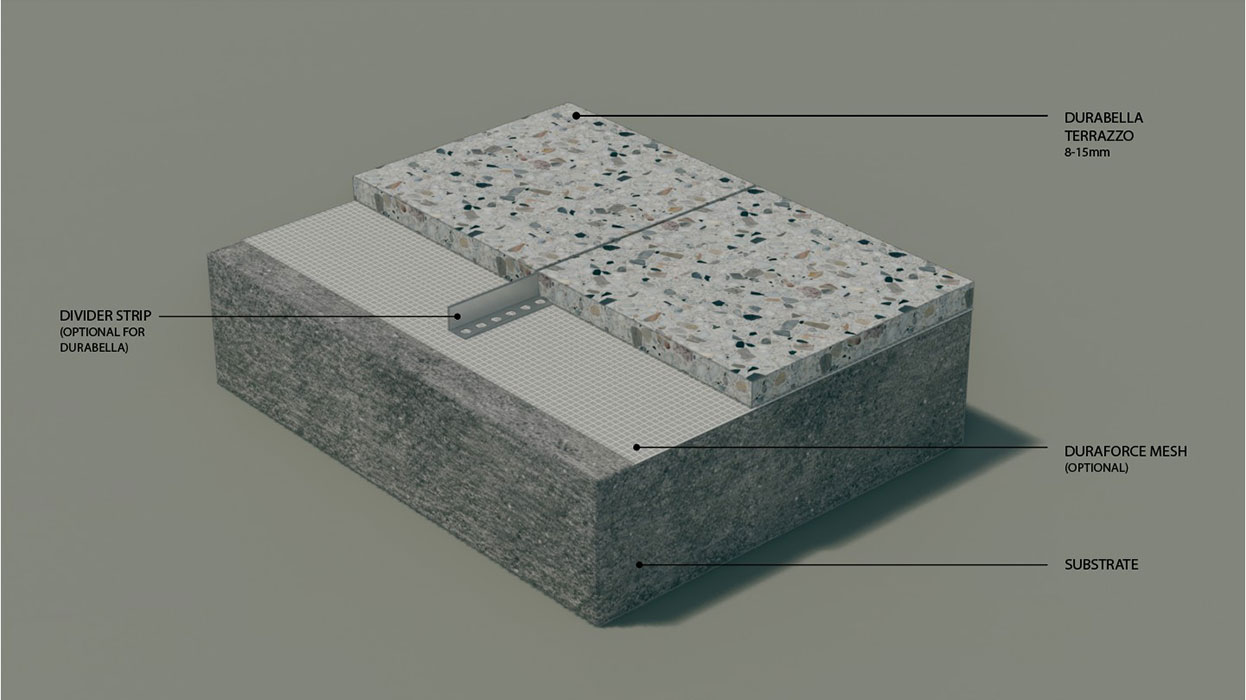
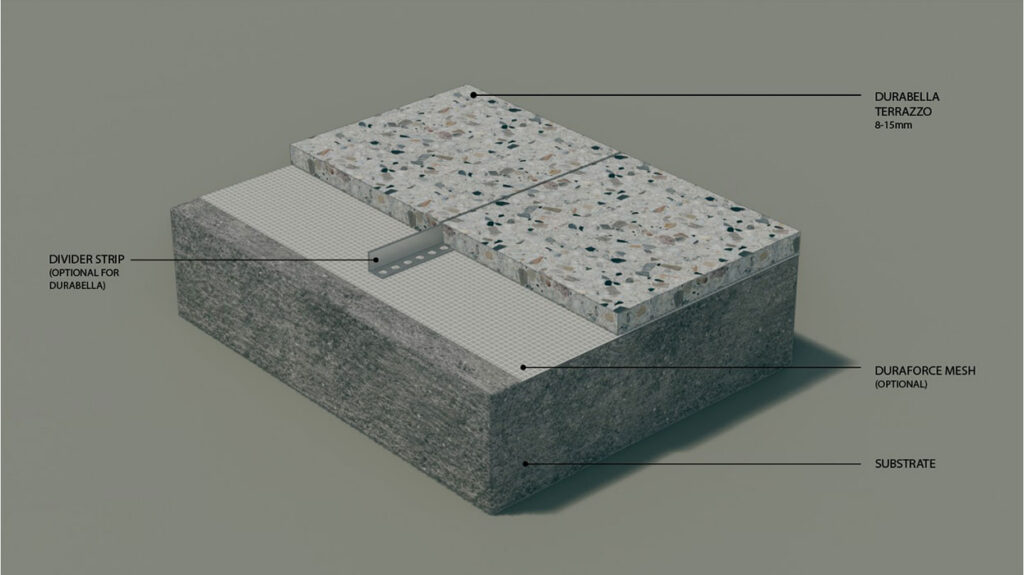
- Durabella is finished between approx. 5mm and 15mm dependent on the maximum aggregate size used.
- Any variation between final installation height and the screed needs to be filled with a levelling product in advance of the installation.
- To prevent the possibility of variation in finish it is recommended to install projects in a single phase.
- The subfloor should be sanded slightly and free of any residue.
- The installation should only proceed if the temperature isn’t lower than 10°C.
- The humidity shouldn’t be higher than 70%
Durabella consumption overview
| Biopolymer Primer | 0,2 kg/m2 |
| Scratchcoat | 0,8 kg/m2 |
| Durabella Biopolymer* | |
| Filler* | |
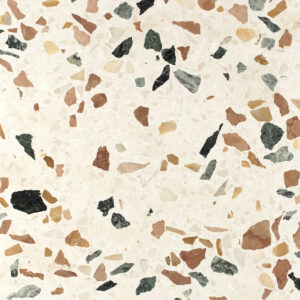
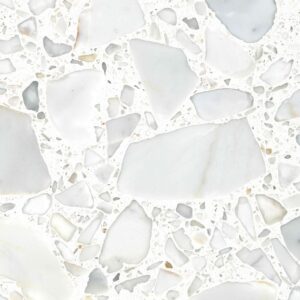
| Marble aggregates* | |
| Biopolymer Prefinish | 0,03 kg/m2 |
| Longlife Matt | 0,10 kg/m2 |
*depends on aggregate size
Equipment and tools
- Mechanical mixer
- Flat trowel
- Metal squeegee
- Electric (Battery) Power Trowel
- Grinding equipment
- Microfiber mop
Working conditions and general instructions
-
- Desired room temperature : 16°C – 25°C
- Temperature for subfloor : min. 15°C – max. 18°C
- Temperature for material : min. 10°C – max. 22° C
- Relative humidity : 50 – 80%
- Clean tools immediately after use with appropriate cleaning material
Subfloor conditions
It is very important that the subfloor is installed at the right level and is flat.
Substrates should be level and flat to SR1 (3mm deviation over 2M).
Durabella isn’t designed to be used as a filling product.
Existing movement dilatations must be respected and be followed in the Durabella.
Preparation and primer
-
- Sand the subfloor lightly with a gauze, coarseness 100 or finer and remove all the dust using
an industrial vacuum cleaner - Mix Biopolymer Primer Comp A until a homogeneous mass. Add Comp B and mix for 2 minutes
- Install the primer with either a flat trowel or squeegee
- Set size 15 kg
- Consumption 0,2 kg/m2 based on installation on a self-levelling compound
- Coverage 75 m2
- Curing time is approx. 6 hours
- Sand the subfloor lightly with a gauze, coarseness 100 or finer and remove all the dust using
Scratchcoat
-
- Mix Scratchcoat Comp A to a homogeneous mass. Add Comp B and mix for 2 minutes
- Pour the mixture into a clean, empty bucket and mix again for 1 minute
- Install with a flat trowel. Set size Scratchcoat 15 kg
- Consumption 0,8 kg/m2. Coverage 18 m2
- Broadcast 1,0 kg/m2 marble aggregates of the chosen marble mix in the wet
- Scratchcoat for adhesion on the next step. The broadcasting can be skipped when installing
Durabella XS - Curing time is 6 hours
Durabella consumptions based on finished thicknesses
| Product | 5mm – XS | 8mm – S | 10mm – M | 12mm – L | 15mm – X |
| Durabella Biopolymer | 2,5 kg/m2 | 4,0 kg/m2 | 4,4 kg/m2 | 5,0 kg/m2 | 5,8 kg/m2 |
| Marble aggregates | 9,0 kg/m2 | 12,60 kg/m2 | 14,40 kg/m2 | 18,90 kg/m2 | 22,50 kg/m2 |
Durabella Biopolymer
-
- Mix Durabella Biopolymer Comp A to a homogeneous mass. Add Comp B and mix for 4 minutes. Add 12 kg of Filler to the mixture. Every set of 10 kg Durabella needs to be mixed with 12 kg Filler. Mix for another minute
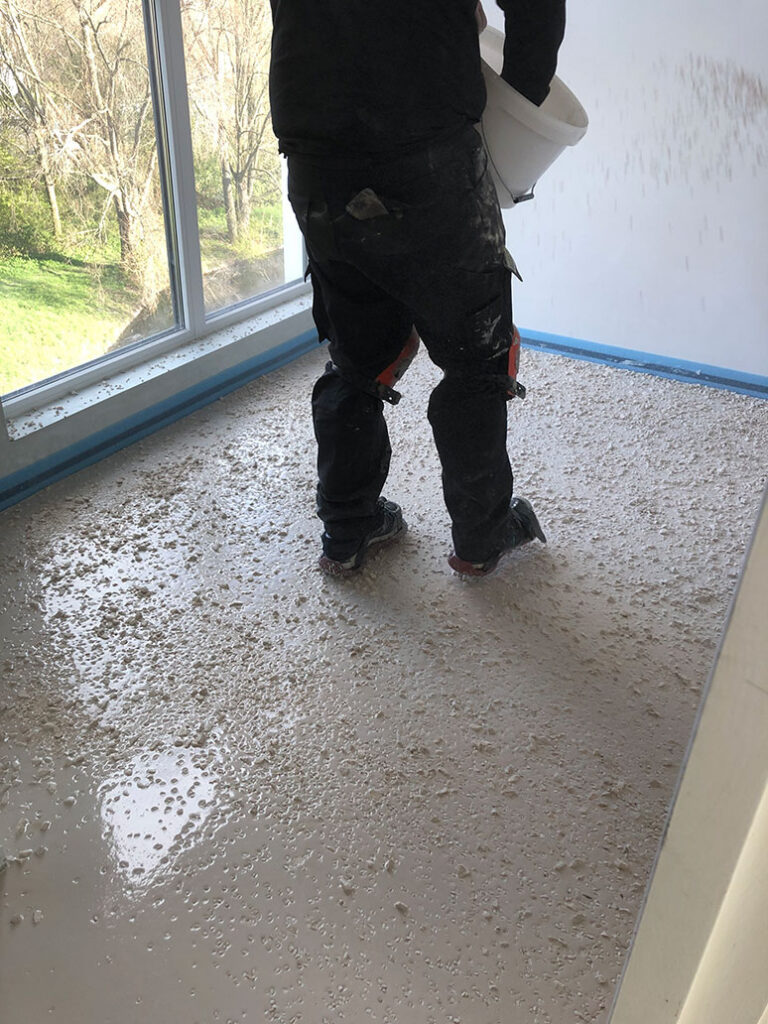
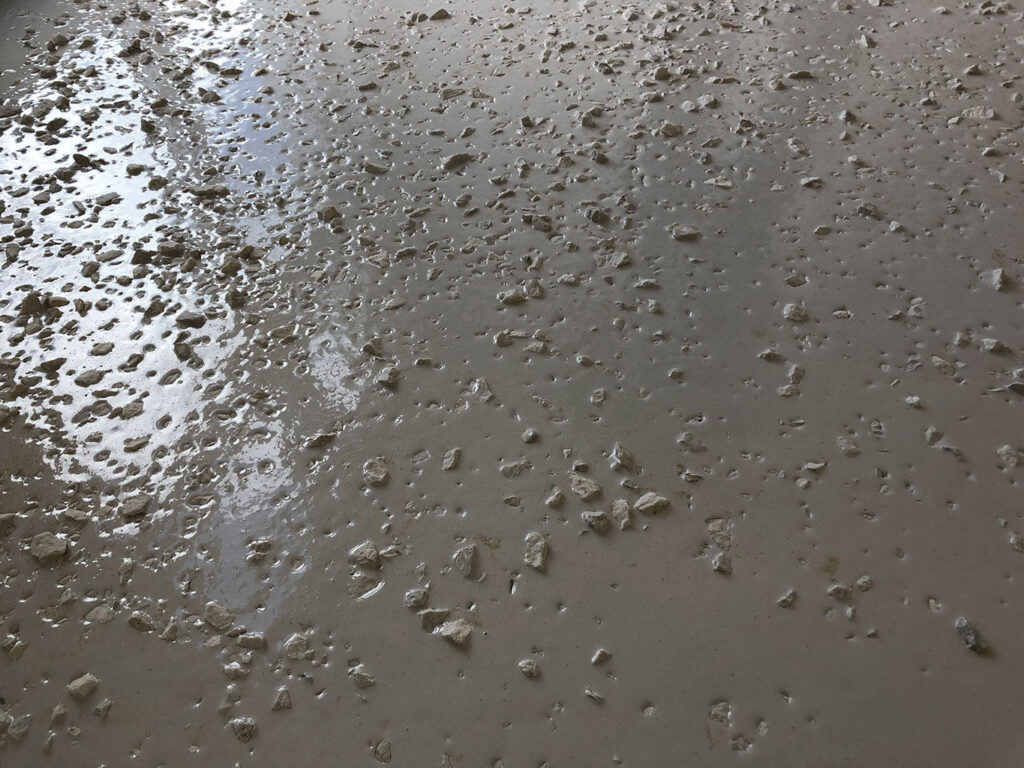
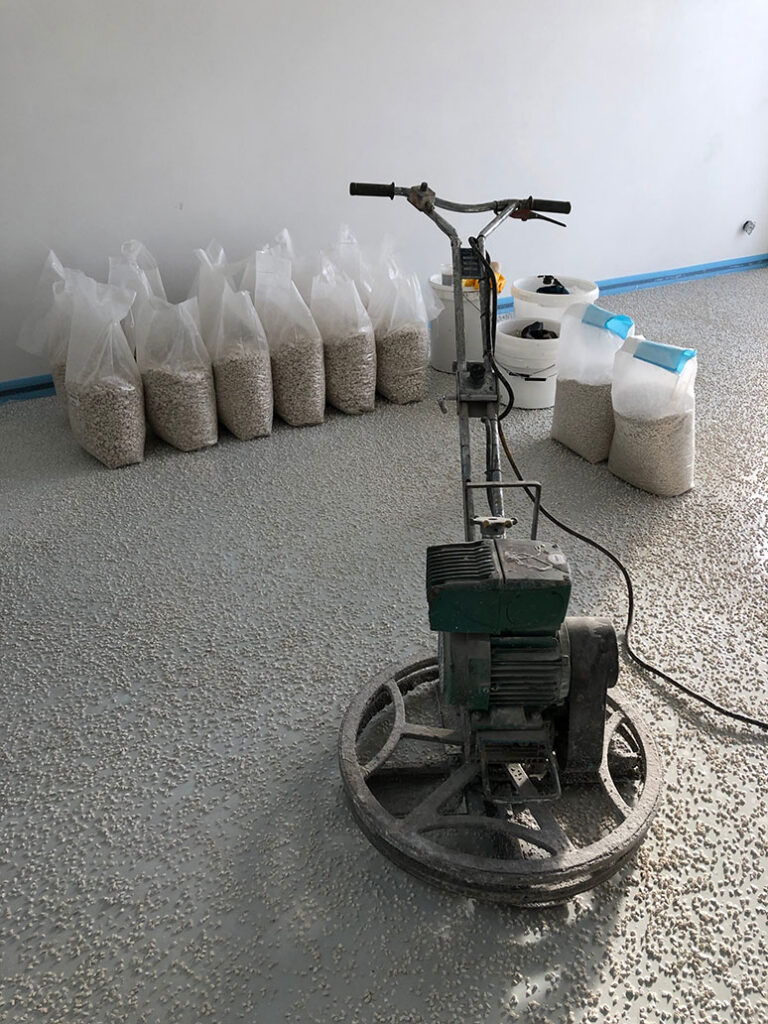
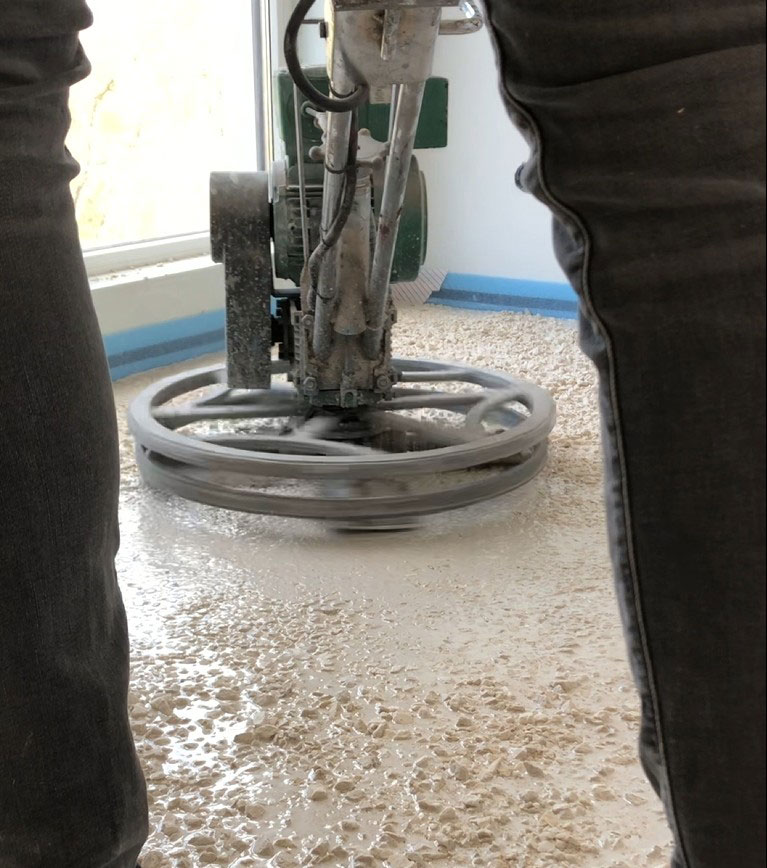
- Apply the binder with a flat trowel over the aggregates in the Scratchcoat. Immediately after the application start broadcasting marble aggregates into the wet binder. Use a power trowel to compact the marble aggregates in the binder, creating a dense terrazzo. For edges use a rigid trowel
- To prevent spots, be sure to keep checking the installed area
- Add more marble into wet spots. For dry spots add more binder
- Curing time is 24 hours
It is very important that the subfloor is flat to prevent any variation in the final result. Durabella is NOT meant to be used to compensate unlevelness or to be installed as a thicker system due to the lack of appropriate height of the screed/subfloor.
Scattering aggregates
Power Float
Finish Instructions
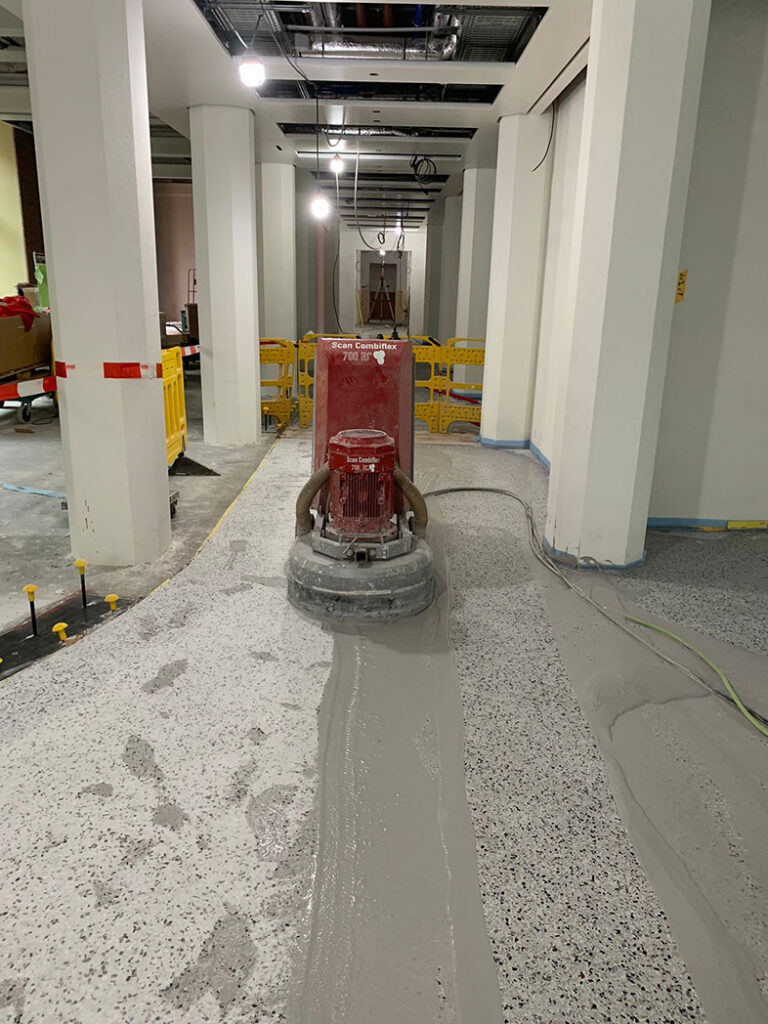
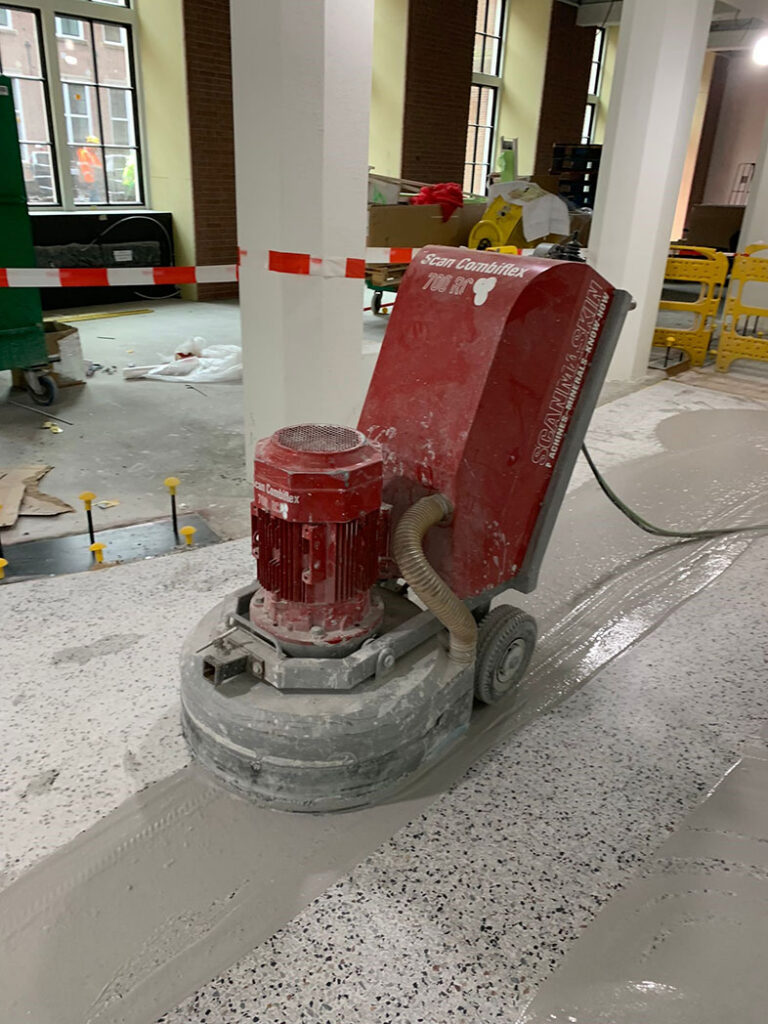
When the terrazzo is cured, you can start the grinding and polishing process.
Recommended steps:
-
- Step 1: metal bond 30-40 grit (dry)
- Step 2: metal bond 60-80 grit (dry)
- Step 3: ceramic bond 100 grit (dry)
- Step 4: vacuum cleaning thoroughly
- Step 5: white buffing pad
- Step 6: install Biopolymer Prefinish
-
- Step 7: ceramic bond 200 grit (dry)
- Step 8: white buffing pad
- Step 9: wet cleaning and vacuuming, wait until completely dry
- Step 10: apply Longlife Matt finish with a microfiber mop in a two layer finish
Longlife can cover 25 m2 or 265 ft2 with two layer per can.
Curing time is 4 hours.
Prefinish
-
-
- Mix Biopolymer Prefinish Comp A to a homogeneous mass. Add Comp B and mix for 4 minutes.
It is important to mix long enough to properly start the curing process - Apply with a metal squeegee or metal trowel at approx. 0,03 kg/m2.
Coverage of one set is 83 m2 - Scatter some Filler on top. Go over the wet material with a rubber squeegee to push the air out of potential holes
- Leave to cure for approx. 12 hours
- Mix Biopolymer Prefinish Comp A to a homogeneous mass. Add Comp B and mix for 4 minutes.
-
Grinding